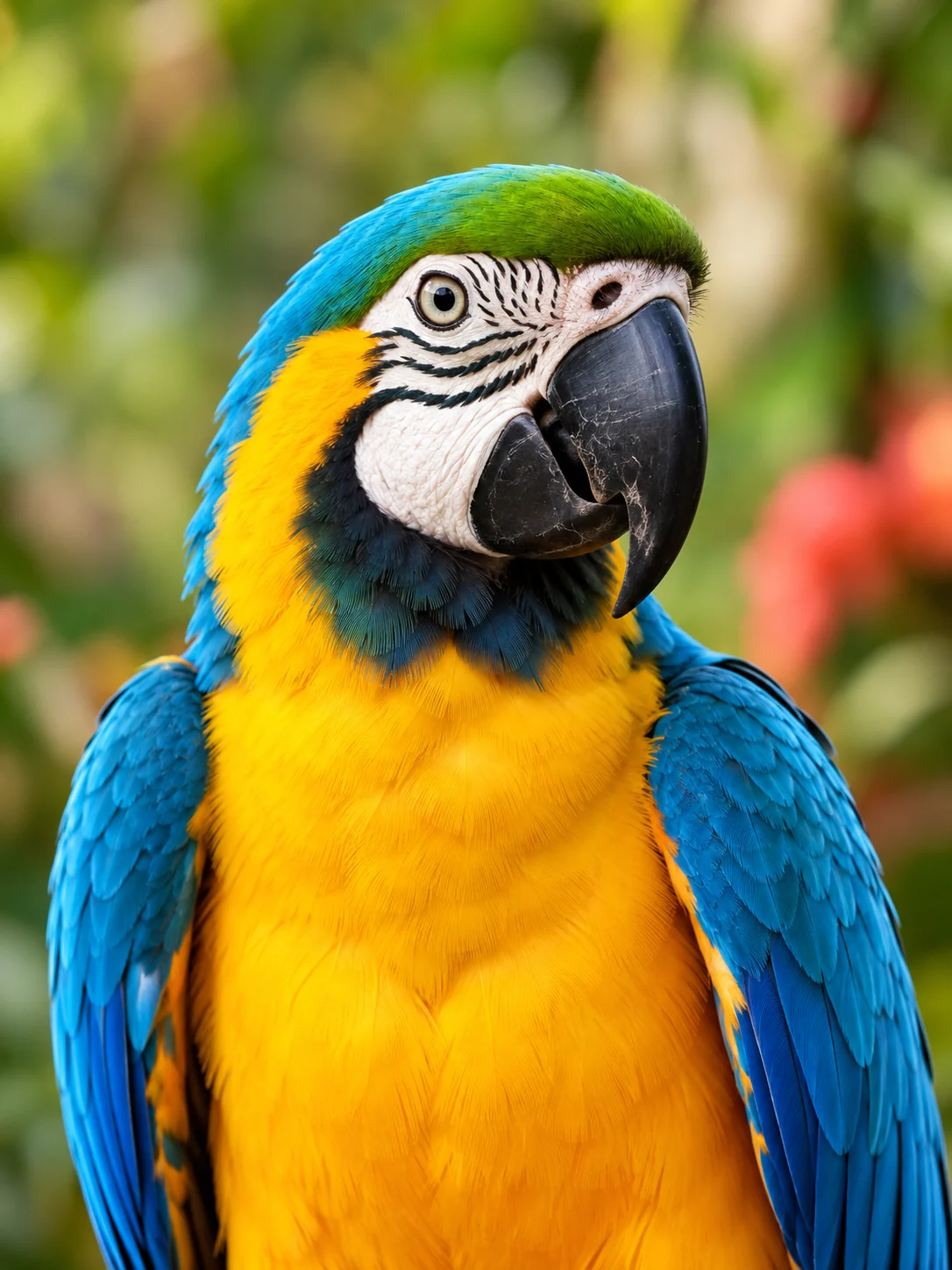
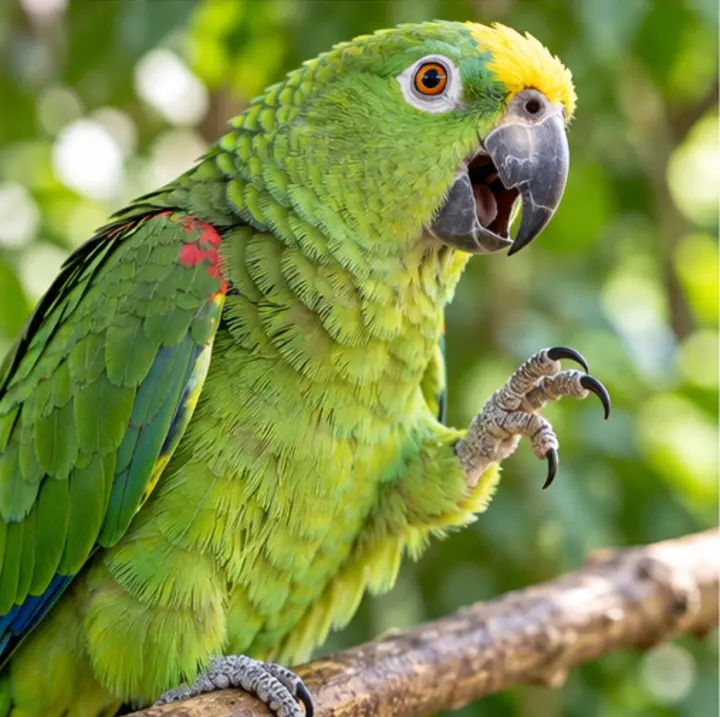
Parrots communicate with their whole body. A raised crest, fluffed feathers or a step away can mean different things in different situations. The useful habit is to notice the complete picture: posture, eyes, sounds, surroundings and what happened just before the behavior.
Look for patterns, not a single signal
Compare your bird during calm, familiar moments with new or busy situations. Does the bird lean toward an offered perch, move away or freeze? Is the body relaxed or stiff? A behavior diary can help you see which approaches invite cooperation and which create pressure.
- Notice the bird’s distance from your hand or an object.
- Give space when the bird repeatedly moves away.
- Reward voluntary approaches instead of forcing contact.
- Consider sleep, noise and recent changes in routine.
Respond with a choice
Offer a stable perch or a familiar target and let the bird decide whether to approach. Short, predictable interactions help you learn what a relaxed response looks like for that individual. If you are teaching a step-up, read the beginner training guide alongside these signals.
When behavior may be a health clue
A sudden change in activity, appetite or normal behavior deserves attention, especially when paired with physical signs. Do not assume every change is a training problem; review warning signs and contact an avian veterinarian when concerned. Explore more context in the Behavior hub.
Further reading: AAV bird owner resources.